
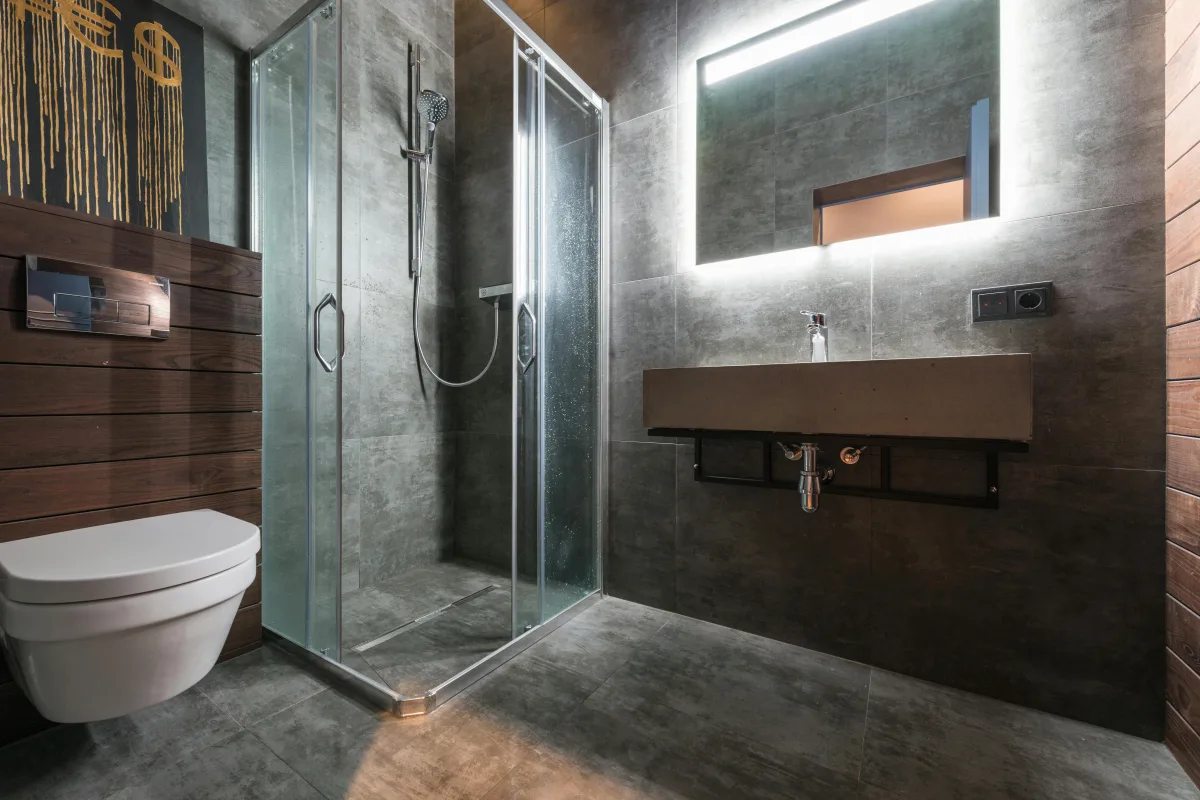
A hot shower puts roughly a liter of water vapor into the air. In a small bathroom with the door closed, relative humidity easily climbs from 45% to 80-95% within ten minutes; the SEN66 sees the steep RH ramp and a smaller, parallel VOC rise from soap, shampoo, and conditioner. The decay depends entirely on ventilation.
A well-functioning bathroom exhaust fan (at least 50 CFM, vented outdoors, run for 20 minutes after the shower per ASHRAE 62.2) clears the humidity within 30-60 minutes. A bathroom without a fan, or with one that ducts to an attic instead of outside, doesn't recover before the next shower; the room stays above 60% RH for hours.
Chronic post-shower humidity is the single most-common mold-risk condition the dashboard flags. The dew point on cool tile, grout, and caulk drops easily below the indoor air temperature, water condenses, mold grows. WHO dampness guidelines connect this directly to respiratory health.
Practical responses: always run the exhaust fan during and 20 minutes after each shower; if the fan is loud or weak, replace it (a quiet 90 CFM unit is about $100); leave the bathroom door cracked after showering if humidity in the adjacent bedroom doesn't spike; squeegee shower walls weekly to reduce standing water. The dashboard's bathroom-pattern recognizer learns your typical shower curve and only flags out-of-pattern events.
References
- EPA - Mold course: water & moisture www.epa.gov
- ASHRAE Standard 62.2 - Residential ventilation www.ashrae.org
- EPA - Volatile organic compounds and indoor air www.epa.gov
- WHO - Guidelines for indoor air quality: dampness and mould www.who.int