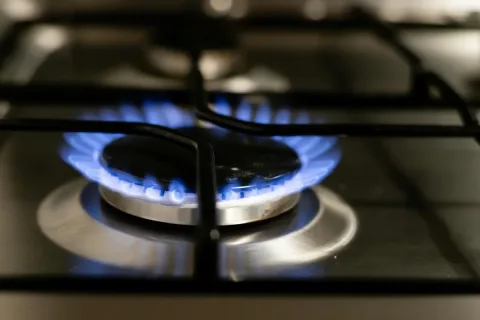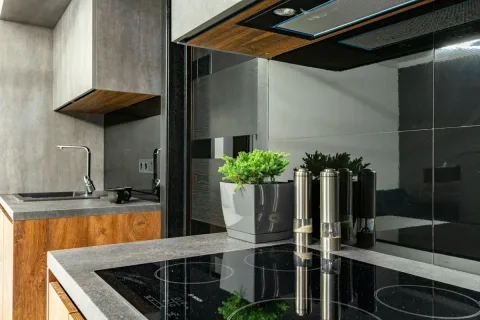


Burning natural gas on a residential cooktop is the single most-studied indoor combustion source. A 4 kW burner running for ten minutes produces measurable spikes in NOx (50–200+ ppb), PM2.5 (often 50–150 µg/m³ in the kitchen, brief peaks higher), ultrafine particles (peaks in the 10⁵ cm⁻³ range), and a long tail of combustion VOCs including formaldehyde and acrolein.
RMI and Lebel et al. document the public-health implications: children in homes with gas cooking have meaningfully higher asthma incidence, and indoor NO2 levels in kitchens during cooking routinely exceed both EPA and WHO outdoor short-term limits. The cooking-induced rise is not subtle: the dashboard sees it from across the house.
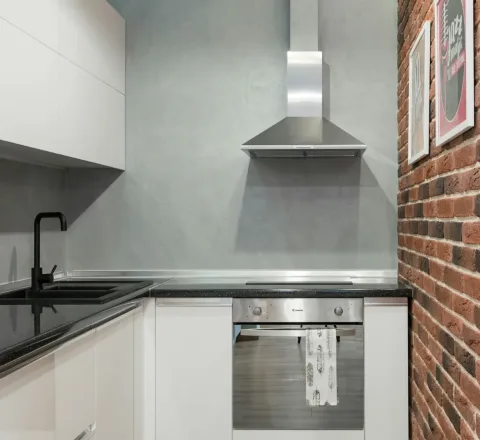
The single most-effective intervention is a properly vented range hood, see the range-hood article. A vented hood at high speed captures 70–95% of cooktop emissions; a recirculating "hood" that filters and dumps the same air back into the kitchen captures essentially zero of the NOx. The dashboard treats the difference as a configuration question, not a buying advice question.
Beyond the hood, replacement is the cleanest long-term answer: induction cooktops eliminate combustion emissions entirely while heating food faster and more controllably than gas. For renters and others who can't replace the cooktop, the secondary mitigations are HEPA filtration in adjacent living spaces and opening a kitchen window during longer cooking sessions.
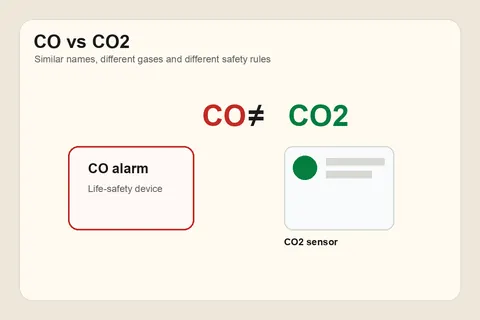
Note on safety: gas cooking is also a minor carbon-monoxide source under poor combustion conditions (yellow flame tips, sooting). Terrestream does not detect CO, see the CO disambiguation. Every kitchen with a gas appliance should have a CO alarm.
References
- RMI - Gas stove pollution and health rmi.org
- Lebel et al. - Methane and NOx from natural-gas stoves doi.org
- EPA - Basic information about NO₂ www.epa.gov
- Health Canada - Residential NO₂ guideline www.canada.ca