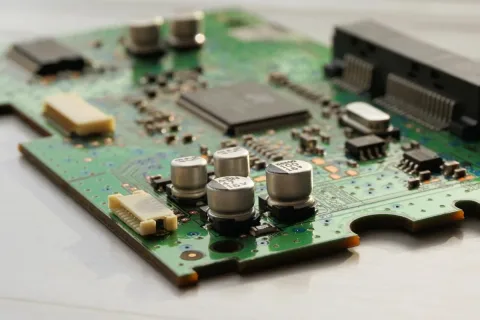

Every number on the dashboard belongs to one of four classes. Device-direct sensor readings come from a physical channel on the Sensirion SEN66, the Bosch BMP390L pressure sensor, or the TI OPT3001 lux sensor. PM1, PM2.5, PM4, PM10, CO2, raw temperature, relative humidity, pressure, and lux are all direct.
Device-derived computations are functions of one or more direct readings. The composite IAQ score, the dew point (from RH and T), the absolute humidity, the VOC and NOₓ Sensirion indexes (which are themselves derived from raw MOX conductance against a rolling baseline), and the multi-room cross-room metrics all live here. The dashboard treats them as more uncertain than direct readings, particularly during the first 24 to 72 hours after install when baselines are still building.
The Google Air Quality API supplies the outdoor pollutant fields: outdoor PM2.5 and PM10, NO2, SO2, ozone, CO, and the US EPA AQI bands, with pollen coming from the Google Pollen API. These are regional estimates; they are not your block, and on a fast-moving event (a smoke plume edge passing through, a sudden wind shift) the dashboard may see your indoor PM track outdoor changes faster than the API can report them.
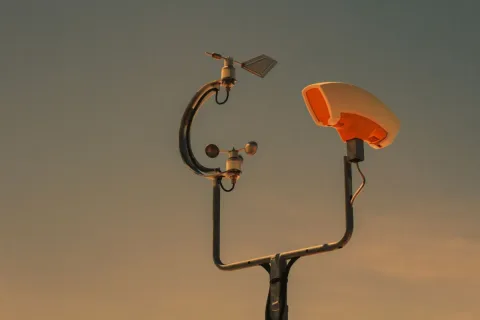
Open-Meteo Forecast (ECMWF) supplies the weather context: outdoor temperature, dew point, wind, precipitation, cloud cover, visibility, snow depth, UV index, solar radiation. These are forecast or analysis values, useful for predicting what indoor conditions will face over the next 24 hours. The interpretation layer uses all four classes together: a sensor spike with no outdoor support is an indoor source; an outdoor spike with no indoor support is a working envelope.
References
- Sensirion - SEN66 environmental sensor sensirion.com
- Open-Meteo - Air Quality API documentation open-meteo.com
- Open-Meteo - Forecast API documentation open-meteo.com
- Copernicus CAMS - Global atmosphere monitoring atmosphere.copernicus.eu