
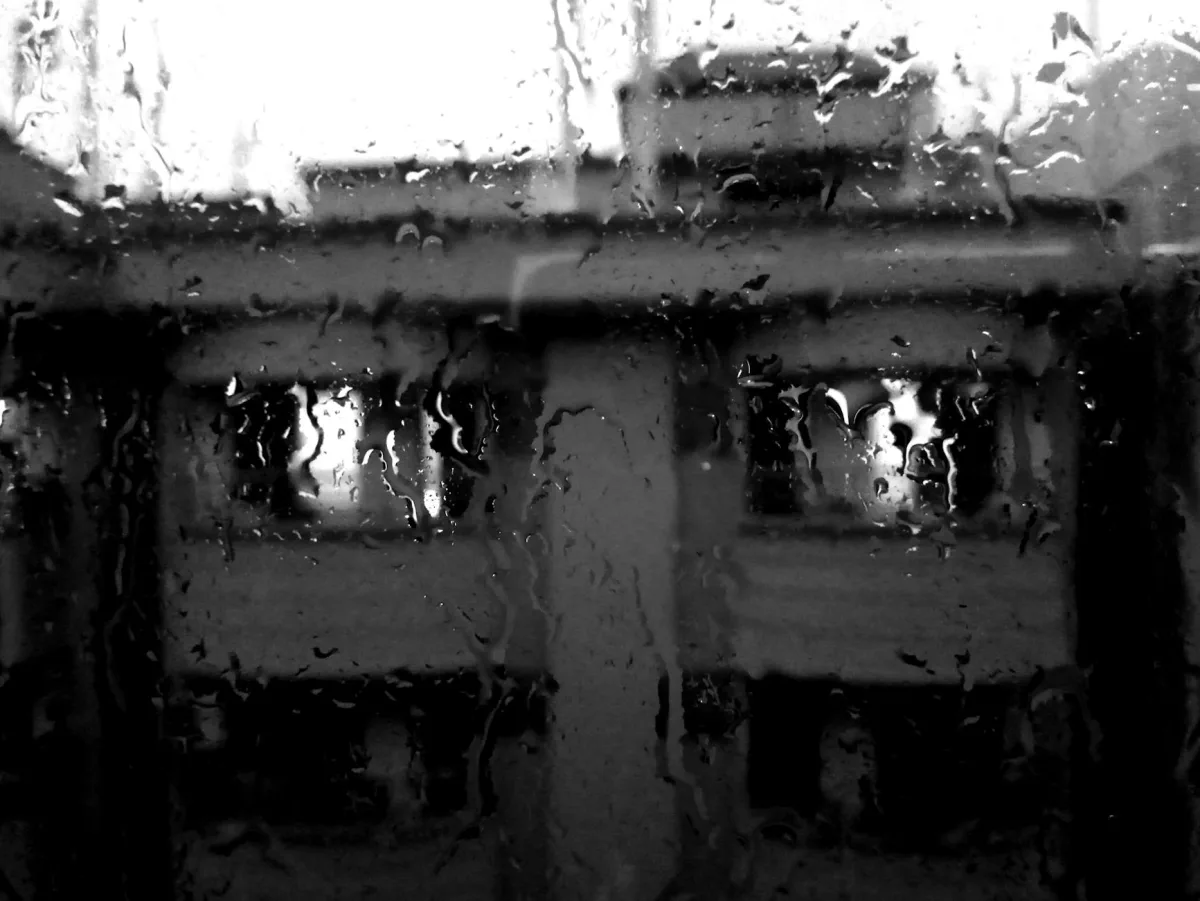
Falling raindrops collide with airborne particles and either incorporate them (the particle dissolves or is absorbed into the droplet) or scavenge them mechanically (the particle sticks to the droplet surface). The cumulative effect: a single hour of moderate rain (5 mm/hr) removes 60–90% of outdoor PM2.5, 30–50% of pollen, and meaningful fractions of soluble gases like SO2 and NH3. Andronache quantifies the physics.
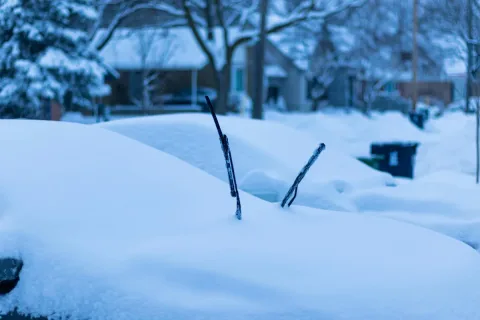
Snow scavenges more slowly, snowflakes fall slower, collision efficiency per particle is lower, but cumulatively over hours produces similar effects. Long-duration light rain often produces cleaner air than short-duration heavy rain because the lower-fall-velocity droplets sweep more efficiently.
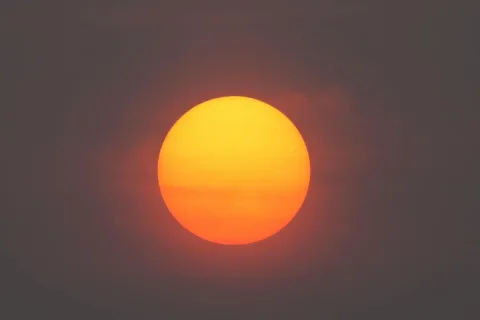
For Terrestream, this matters in three contexts. First, post-rain ventilation: when outdoor PM and pollen are knocked down by a recent rain, the dashboard suggests opening windows during the clean-air window (typically the 2-6 hours following sustained precipitation). Second, wildfire-smoke recovery: a single steady rain often resolves a multi-day smoke event in a single afternoon. Third, post-storm: very high outdoor RH after a storm raises indoor humidity through infiltration. The dashboard's humidity-trend forecast accounts for it.
What rain does not do well: remove gas-phase ozone (sparingly soluble in water), CO2 (in trace amounts), or NO2 (partially). It clears particles and the most-soluble acidic gases; it largely leaves photochemical pollutants alone. So a sunny afternoon two days after a rain can still have elevated ozone even though PM is exceptionally low.
References
- Andronache - Aerosol scavenging by rain (J. Geophys. Res.) doi.org
- NOAA NWS - Precipitation safety www.weather.gov
- Open-Meteo - Forecast API documentation open-meteo.com
- EPA - Wildfire smoke course www.epa.gov