
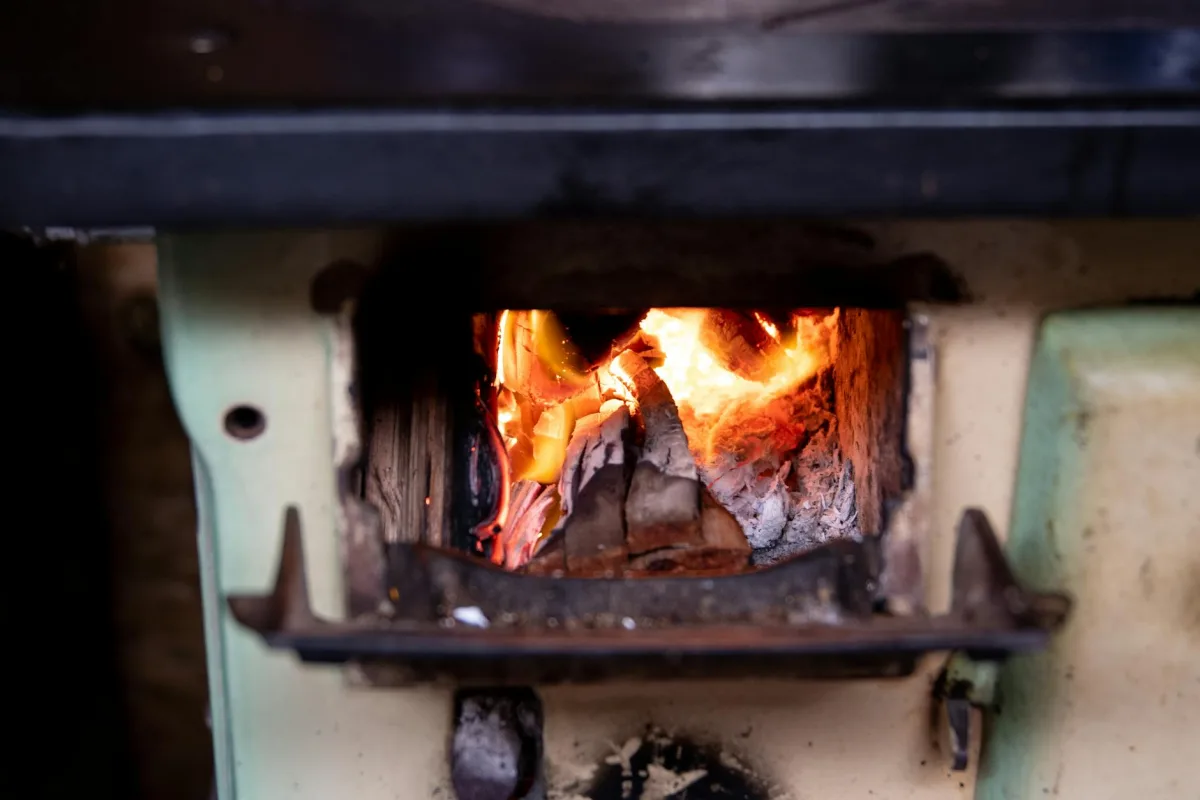
Burning wood is the highest-PM combustion source most homes ever encounter at scale. A single evening fire in a well-maintained EPA-certified stove still pushes indoor PM2.5 30-100 µg/m³ above baseline for the duration of the burn; an older stove, a smoky load, or a poorly drawing flue can easily push past 300 µg/m³. The EPA Burn Wise program documents the variation.
The composition matters as much as the mass. Wood smoke carries PM2.5 and ultrafines, but also benzene, formaldehyde, polycyclic aromatic hydrocarbons (PAHs), and acrolein. The fine and ultrafine fractions reach the same depth in the lungs as cigarette smoke, and several of the trace species are independently classified as carcinogens.
On the sensor side, the fingerprint is distinctive: a slow build-up over 10-20 minutes (longer than candles, slower than a gas burner), broad-spectrum PM elevation across PM1.0 through PM10, a sustained VOC-index rise of 100-300 above baseline, and a long decay tail (hours, not minutes). If the dashboard sees this shape during cold months, the inference is high-confidence "wood-burning".
Mitigations: an EPA-certified or CSA-certified stove emits a fraction of what an older open hearth does. Drying firewood to under 20% moisture content (a moisture meter is cheap) cuts smoke significantly. Cleaning the flue annually prevents back-drafting. Run a HEPA purifier in the same room while burning. Health Canada publishes residential wood-burning guidance with finer detail.
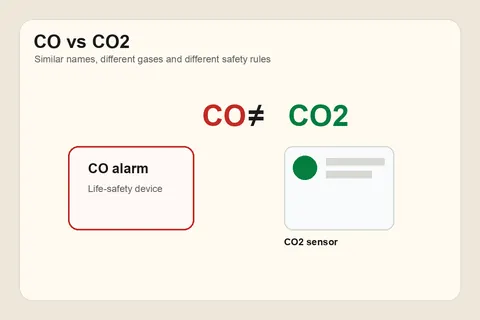
Note on safety: solid-fuel appliances are also the largest residential CO source. Terrestream does not detect CO; every home with a wood stove, fireplace, or pellet stove needs a UL 2034 / CSA 6.19 CO alarm.
References
- EPA Burn Wise - Cleaner wood-burning practices www.epa.gov
- EPA - Wood smoke and your health www.epa.gov
- LBNL - Indoor exposure from wood stoves doi.org
- Health Canada - Residential wood-burning www.canada.ca