
A wildfire-smoke episode is not a surprise event in the western United States anymore. EPA and AirNow both treat the May-through-September window as the working assumption for fire-prone regions, and the question is no longer "if" but "how prepared the household will be when it hits." The events that go badly are not the ones with the worst PM2.5 readings; they are the ones where the household ran out of MERV-13 filters on day two, the HEPA was undersized for the room it ended up sheltering in, and nobody had thought through what to do with the kids' soccer practice. This article is the pre-fire-season checklist, sized to a typical western-US household and meant to be done in April or early May.
Filter and respiratory stocking. Buy a season's worth of MERV-13 furnace filters in your size: typically 3-4 filters per HVAC system if you run it heavily during smoke events (a MERV-13 in a smoky house can load up in 2-3 weeks instead of the usual 90 days). Have at least one HEPA replacement cartridge per purifier on hand. Stock NIOSH-approved N95 respirators (one or two per family member, sized correctly: KN95 fit varies more than N95, and surgical masks do almost nothing for wildfire PM); per CDC smoke guidance N95 is the floor for outdoor protection during smoke events. Note the expiration dates on the elastic and replace stockpiled masks every 5 years.
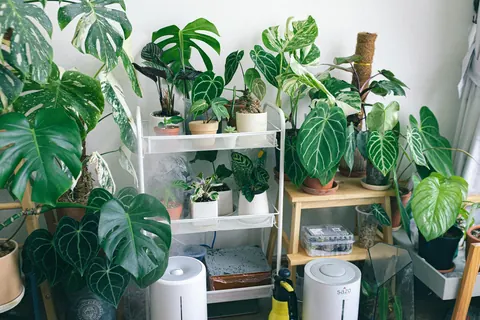
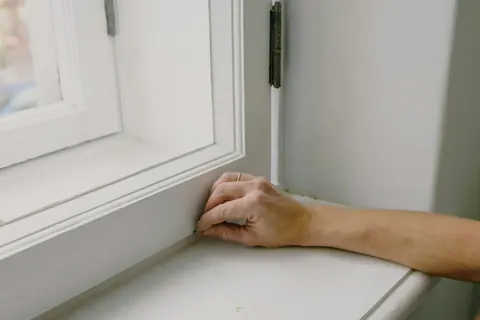
Envelope audit and HEPA sizing. Walk the building once before fire season. Door sweeps on every exterior door; weatherstripping on any window that you would close during smoke; verify the HVAC fresh-air damper is functional and can be closed (a builder-installed economizer that always pulls outside air is a liability during smoke season). Identify which room will be the "clean room" if a full envelope close-down lasts more than a day, typically a bedroom or family room with the fewest exterior openings, and confirm a HEPA in that room is sized correctly: target CADR ≥ room area in square feet × 0.75, which gives roughly 4-5 air changes per hour. Two undersized HEPAs in series do not equal one correctly-sized one; the airflow does not stack that way.
Communications and overlap with evacuation kits. Decide in advance how the household will get alerts (AirNow, the local National Weather Service smoke product, the county emergency-alert system; pick at least two so a single outage does not blind you), how family members will check in if cell networks degrade, and how neighbors will coordinate (one elderly neighbor without a HEPA is the most common preventable injury during a smoke event). For households in defensible-space-relevant zones, the IAQ kit and the evacuation kit overlap: N95s, eye protection, medications, and a battery-powered radio belong in both. The dashboard helps by surfacing the indoor-outdoor PM ratio so you know whether closing the envelope is still helping or whether the house has become a smoke trap (this happens when fine smoke has infiltrated and a clean run-cycle is needed). See wildfire smoke for the event itself, and school wildfire response for the institutional version.
This is general guidance, not a substitute for professional assessment of your specific home. Major interventions (HVAC redesign, sealing a leaky envelope, mold remediation, electrical work for fans or venting) should be done with a certified professional. For chronic problems that don't respond to the steps here, see when to call a pro.
Terrestream Intelligence · near you
What a Terrestream would flag in Columbus, OH today
Situation
Outdoor smoke intrusion
Smoke advisory conditions · AQI 41 · PM2.5 9 µg/m³ · 70° · near Columbus, OH
Outdoor AQI · Open-Meteo · 8 min ago
Wildfire smoke is likely reaching your area. In a home like this one, a Terrestream would flag fine particles drifting upward indoors and recommend closing up and filtering — then keep watching whether indoor air is holding cleaner than outside.
- PM2.5 (indoor) 12 µg/m³ Moderate
- CO₂ (indoor) 640 ppm Moderate
Recommended action Now
Seal and filter
- Close windows
- Run an air cleaner
Keep windows and doors closed, run an air cleaner, and avoid adding indoor particles (frying, candles, vacuuming). The goal is holding indoor PM below outdoor.
For health guidance and any stay-indoors or evacuation instructions, follow AirNow and your local authorities.
Illustration: outdoor conditions are real, approximate-area data; indoor readings are modeled, not measured. No device is reporting from your home. Not medical advice.
References
- AirNow - Wildfires & smoke www.airnow.gov
- CDC - Wildfires and smoke www.cdc.gov
- EPA - Wildfire smoke course www.epa.gov
- Red Cross - Wildfire safety www.redcross.org