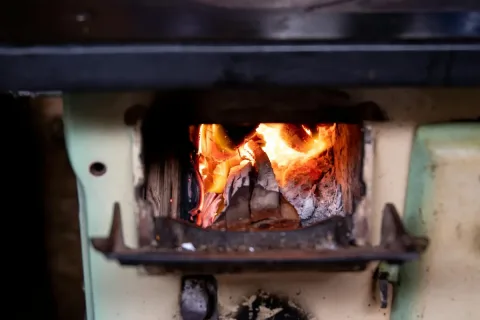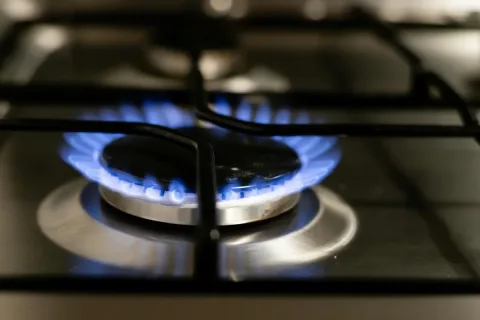

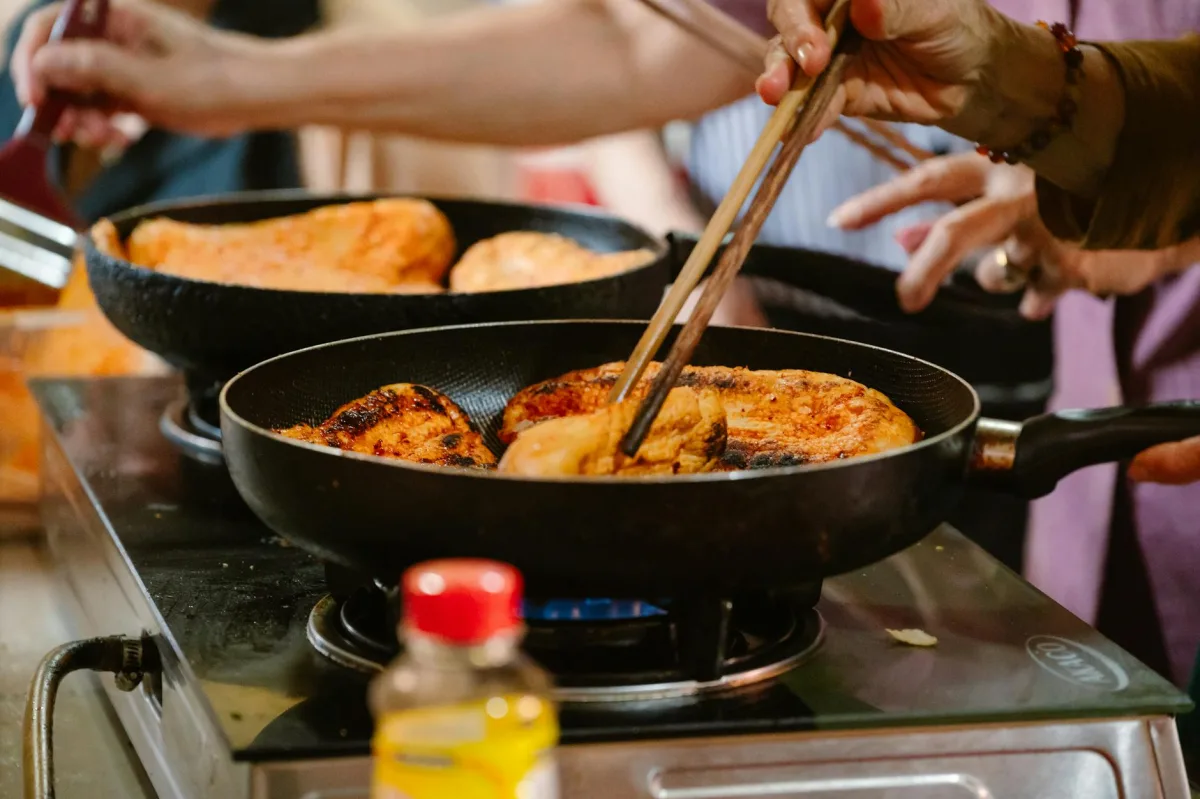
Cooking is the dominant indoor PM and VOC source for most homes. Co-movement patterns and gas-stove cooking cover the basics. This article goes deeper: each cooking method has its own fingerprint, and the dashboard differentiates them.
Gas cooking: NOx rises sharply at burner ignition, PM2.5 follows from food, VOCs from food and combustion, humidity from food moisture. Lebel et al. measured methane and NOx emissions from natural-gas stoves; the dashboard recognizes the NOx-first signature. Induction cooking: PM2.5 and VOCs from food alone, no NOx rise, minimal CO2 from combustion. The diagnostic is the absence of NOx alongside the food-source PM and VOC.
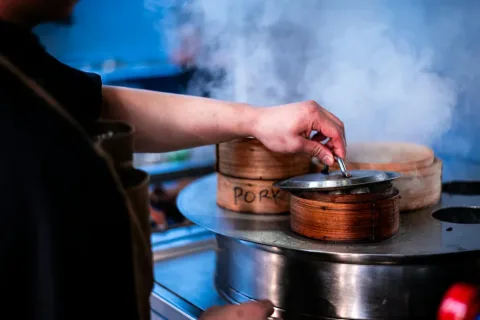
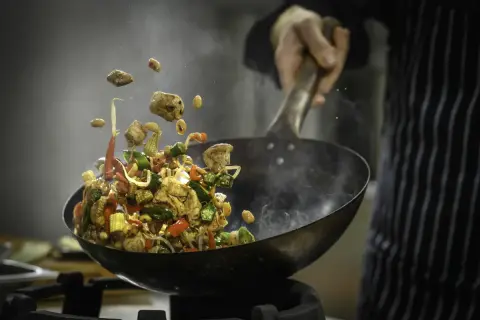
Frying: dramatic PM2.5 peaks from oil aerosol, dominant in the 0.1 to 1.0 µm range, sustained throughout the frying session. Roasting (oven): slower PM rise, VOC-dominant from caramelization and Maillard reactions, sustained over 30 to 90 minutes. Grilling (indoor electric grill or stovetop): high PM2.5 with smoke fraction, similar to frying but with charcoal-like VOC signature. Singer et al. measured kitchen aerosols across these methods.
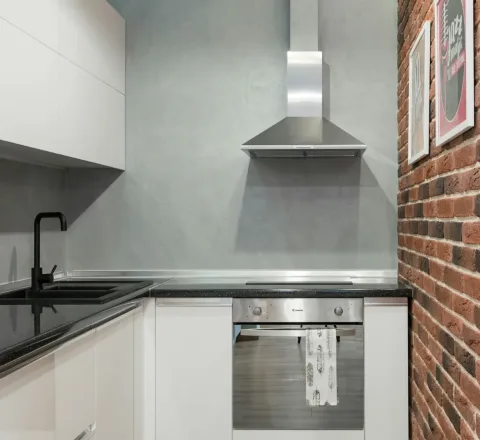
The dashboard's "cooking detected" notification includes a method classification when the signature is clean enough. A user with a gas stove who is offered an induction cooktop and switches will see the dashboard's NOx-during-cooking pattern essentially disappear within a week; the cumulative-exposure baseline drops accordingly. Range hood usage shows in the data too: hood-on reduces all parameter peaks 70 to 90% relative to hood-off in the same room, see range hood venting.
References
- RMI - Gas stove pollution and health rmi.org
- Lebel et al. - Methane and NOx from natural-gas stoves doi.org
- LBNL - Kitchen range-hood effectiveness doi.org
- Singer et al. - Indoor cooking emissions www.tandfonline.com