
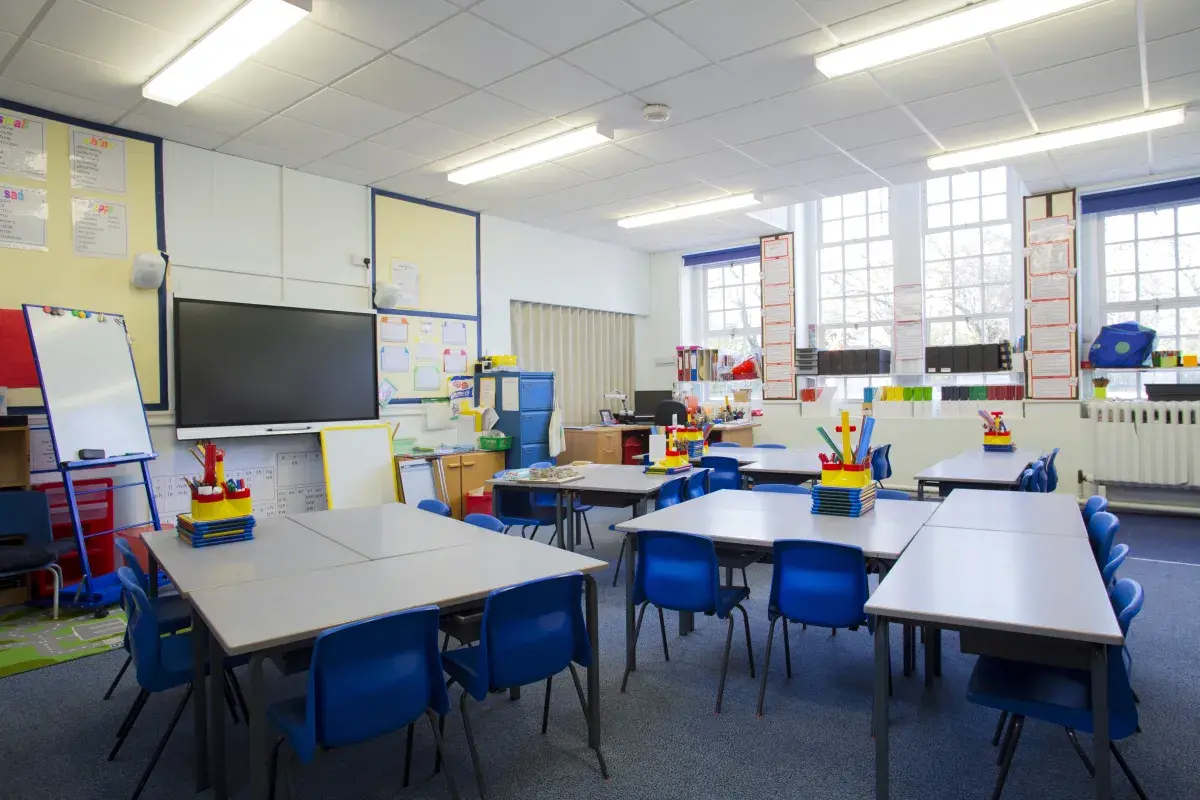
School IAQ is operationally hard because buildings are old, occupancy changes by bell schedule, HVAC zones rarely match classroom reality, and facilities teams are stretched thin. A monitor is useful only if it reduces that complexity into evidence that can be acted on.
CO2 identifies ventilation stress during occupied periods. PM channels show filtration performance and recovery after outdoor smoke, cleaning, art rooms, cafeterias, or resuspension events. RH/T help catch comfort and condensation risk. VOC and NOx indexes help distinguish cleaning, combustion, and source events from normal occupancy.
The commercial value is not a wall of numbers. It is prioritization: which rooms need attention, which recover quickly, which are consistently under-ventilated, and which patterns point to maintenance or behavior rather than outdoor air.
Terrestream should be positioned as evidence for facilities teams, not as a substitute for code compliance, professional commissioning, or certified safety devices.