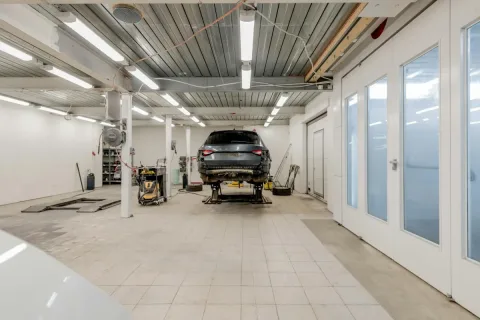


Benzene is one of the most studied carcinogens in the EPA Toxics Release Inventory. IARC Group 1; the WHO position is that no safe level has been established for benzene exposure because the dose-response relationship for acute myeloid leukemia appears linear all the way to zero. Indoor sources include vehicle exhaust from attached garages, gasoline and solvent storage, vape and cigarette aerosol, gas-stove combustion at idle, and infiltration during wildfire smoke events.
A CDC-cited 2017 study found benzene concentrations in e-cigarette aerosol orders of magnitude above ambient outdoor levels under certain coil-temperature conditions, putting indoor vaping in the same category of concern as ETS for benzene exposure. Attached garages are the other domestic worst case; even with the door closed, vehicle off-gassing migrates into the house through the firewall and any utility penetrations. Cold-start emissions are particularly high, see attached garage.
The Terrestream SEN66 does not measure, report, or detect benzene, and must not be used to detect it. MOX gas sensing has no per-compound specificity, so it cannot isolate or quantify benzene. Identifying benzene requires speciated lab testing (sorbent tubes with thermal desorption and GC-MS analysis; about $75-200 per sample); if you suspect benzene exposure, seek professional testing or advice. The cheapest protection is eliminating sources rather than measuring: no idling in the garage, no smoking or vaping indoors, attention to gas-stove combustion completeness, and managing infiltration during outdoor events.
If you have reason to suspect benzene - an attached garage, indoor smoking or vaping, a gas appliance burning poorly - Terrestream cannot confirm or rule it out. Address the source directly (no idling in an attached garage, no smoking or vaping indoors, service gas appliances showing yellow flame tips) and seek professional testing or advice if you need a definitive answer.
This is environmental information, not medical advice. The dashboard's readings help you make decisions about the air in your space. They do not diagnose conditions, interpret symptoms, or replace conversations with your physician. If symptoms persist, worsen, or coincide with a known exposure, talk to a healthcare professional. See the AI's medical-advice scope.
References
- IARC - Benzene monograph monographs.iarc.who.int
- ATSDR - Toxicological profile for benzene www.atsdr.cdc.gov
- EPA - Ground water and drinking water (benzene) www.epa.gov
- CDC - About e-cigarettes (vaping) www.cdc.gov