
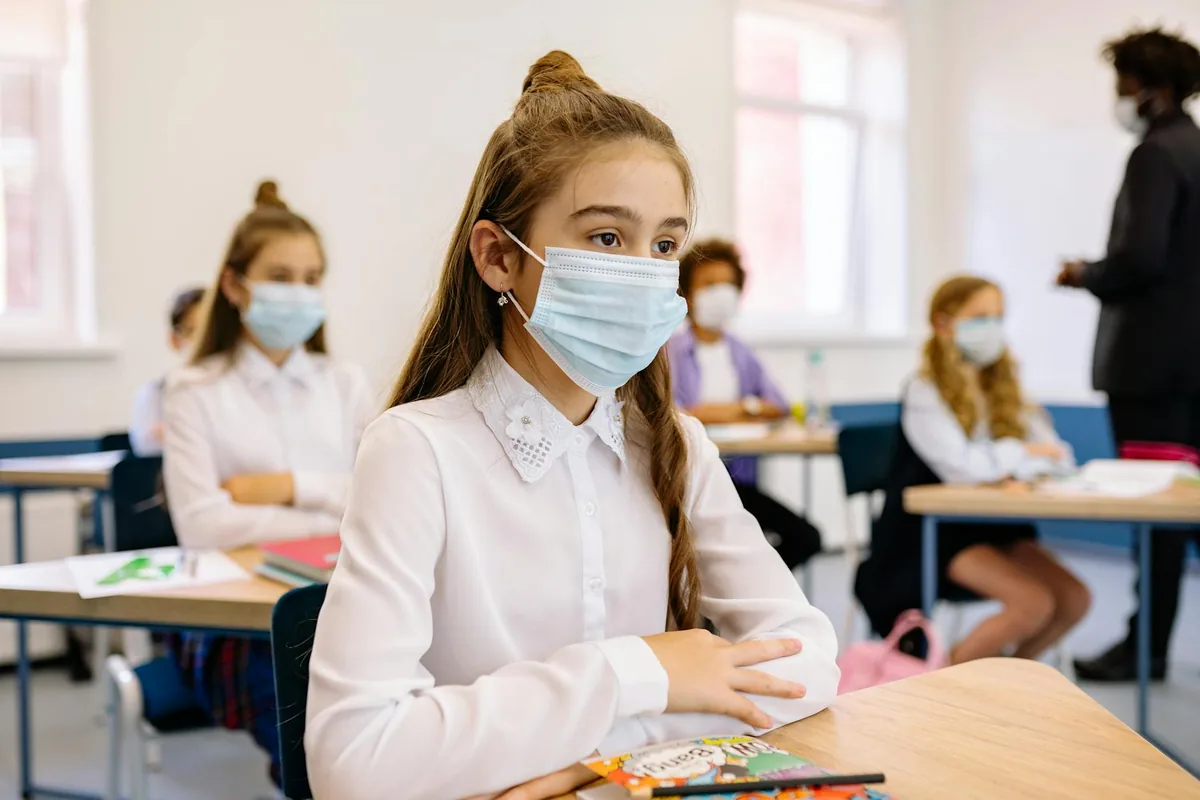
In wildfire-prone regions (now extending well beyond traditional fire zones), district administrators face recurring decisions during smoke events: continue normal operations, restrict outdoor activity, shelter-in-place with HVAC, or close the school. The decision is consequential for student health and for parents who depend on school as childcare; tools and frameworks have matured significantly since 2017.
The EPA wildfire smoke course and California OEHHA wildfire smoke guidance are the canonical references. Common AQI thresholds: under 100, normal operations; 100-150, limit outdoor PE and recess; 150-200, indoor recess and verify HVAC is running with high-efficiency filters; 200-300, cancel outdoor activities entirely; 300+, consider closure or shelter-in-place with portable HEPA.
Building-envelope and HVAC capacity matter as much as outdoor AQI. A newer school with MERV-13 filtration, sealed envelope, and demand-controlled ventilation can hold indoor PM2.5 at a fraction of outdoor levels even at AQI 300+. An older school with operable windows and worn weatherstripping may not. The decision is local; EPA-endorsed DIY Corsi-Rosenthal boxes have become the standard remediation in classrooms with poor envelope.
Continuous indoor monitoring is the bridge between outdoor AQI and operational decisions. A Terrestream sensor per classroom (or per HVAC zone) lets administrators see whether shelter-in-place is actually working; if indoor PM2.5 tracks outdoor PM2.5, the envelope and filtration aren't doing the job, and closure becomes the safer call. Documentation matters too: parents and boards want to see the data behind the decision.
Terrestream Intelligence · near you
What a Terrestream would flag in Columbus, OH today
Situation
Outdoor smoke intrusion
Smoke advisory conditions · AQI 30 · PM2.5 5 µg/m³ · 70° · near Columbus, OH
Outdoor AQI · Open-Meteo · 2 h ago
Wildfire smoke is likely reaching your area. In a home like this one, a Terrestream would flag fine particles drifting upward indoors and recommend closing up and filtering — then keep watching whether indoor air is holding cleaner than outside.
- PM2.5 (indoor) 12 µg/m³ Moderate
- CO₂ (indoor) 640 ppm Moderate
Recommended action Now
Seal and filter
- Close windows
- Run an air cleaner
Keep windows and doors closed, run an air cleaner, and avoid adding indoor particles (frying, candles, vacuuming). The goal is holding indoor PM below outdoor.
For health guidance and any stay-indoors or evacuation instructions, follow AirNow and your local authorities.
Illustration: outdoor conditions are real, approximate-area data; indoor readings are modeled, not measured. No device is reporting from your home. Not medical advice.
References
- EPA - Wildfire smoke course www.epa.gov
- AirNow - Wildfires & smoke www.airnow.gov
- California OEHHA - Wildfire smoke fact sheet oehha.ca.gov
- EPA - DIY air cleaners for wildfire smoke www.epa.gov