
Most indoor-humidity problems come from one of three patterns: ongoing source (poorly exhausted bathroom or kitchen, evaporative cooler, large fish tank, leaky plumbing), AC undersized for the cooling load (the unit cools the air but does not run long enough to dehumidify it), or basement and slab moisture (groundwater migration, foundation leaks, capillary rise). The intervention depends on which pattern fits.
Source control. Run bath fans during showers and for 20-30 minutes after; size them to ≥50 CFM and confirm they actually exhaust outdoors (not into the attic, a code violation that is unfortunately common). Run kitchen exhaust during all cooking. Repair plumbing leaks immediately; even small slow leaks under sinks raise whole-house RH measurably. For evaporative coolers, see evaporative coolers.
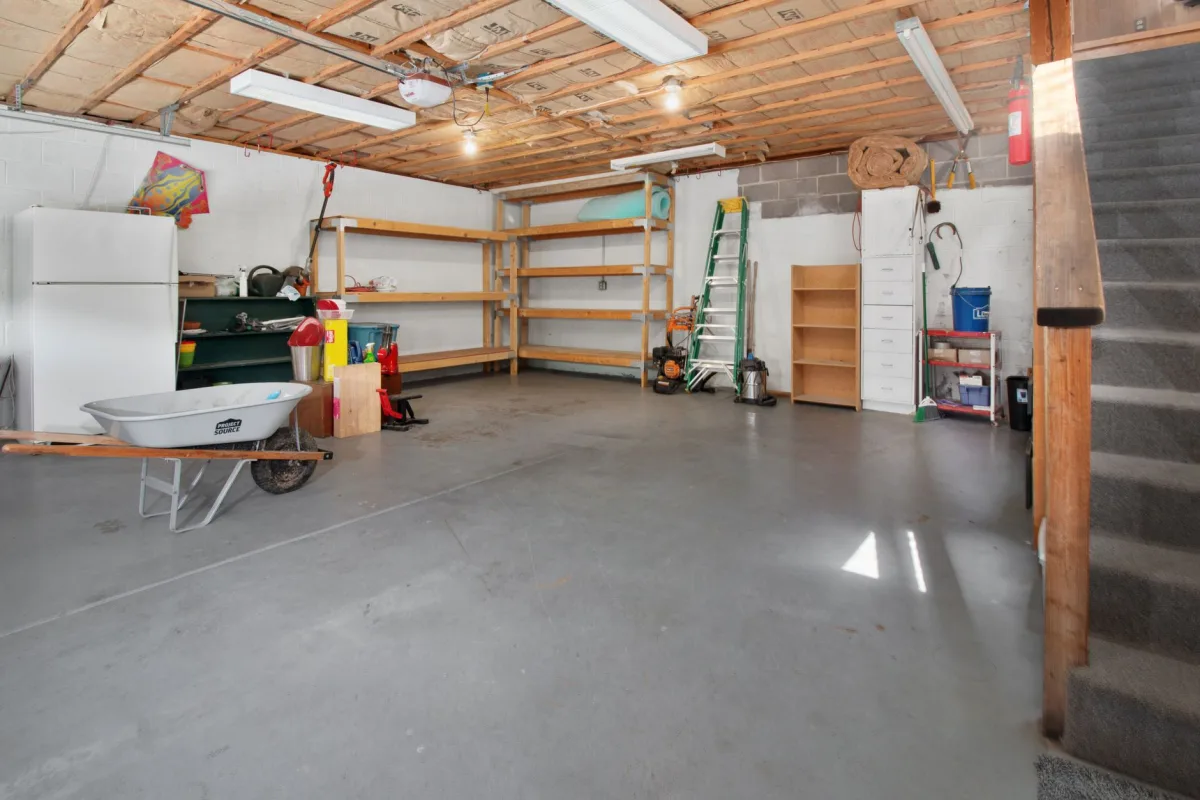
Dehumidification. Portable dehumidifiers are cheap ($150-400) and the right answer for basements and single rooms. Size by Energy Star pint rating; a 30-pint unit handles a moderately damp 1,500 ft² basement, a 50-pint a wet 2,500 ft² basement. Whole-house dehumidifiers integrate with HVAC and are right for whole-house issues ($1,500-3,000 installed). Set point: 45-50% RH. Below 40% RH in winter risks condensation on cold-side windows when humidity is locally high; above 55% risks mite and mold support.
Building-envelope repair. Persistent basement humidity is often a foundation or drainage issue: failing gutters, insufficient grade away from the house, missing or failing vapor barriers, foundation cracks. These are real repairs that pay off in IAQ for decades. The dashboard's humidity trace history is a useful diagnostic: source-driven humidity shows clear daily peaks aligned with activities; envelope-driven humidity shows slow weekly drift correlated with outdoor weather. See humidity for the underlying physiology and mold spores for the failure mode at the high end.
This is general guidance, not a substitute for professional assessment of your specific home. Major interventions (HVAC redesign, sealing a leaky envelope, mold remediation, electrical work for fans or venting) should be done with a certified professional. For chronic problems that don't respond to the steps here, see when to call a pro.
References
- EPA - Mold and health (humidity) www.epa.gov
- WHO - Guidelines for indoor air quality: dampness and mould www.who.int
- ASHRAE Standard 55 - Thermal Environmental Conditions www.ashrae.org
- DOE - Room air conditioners and dehumidifiers www.energy.gov