

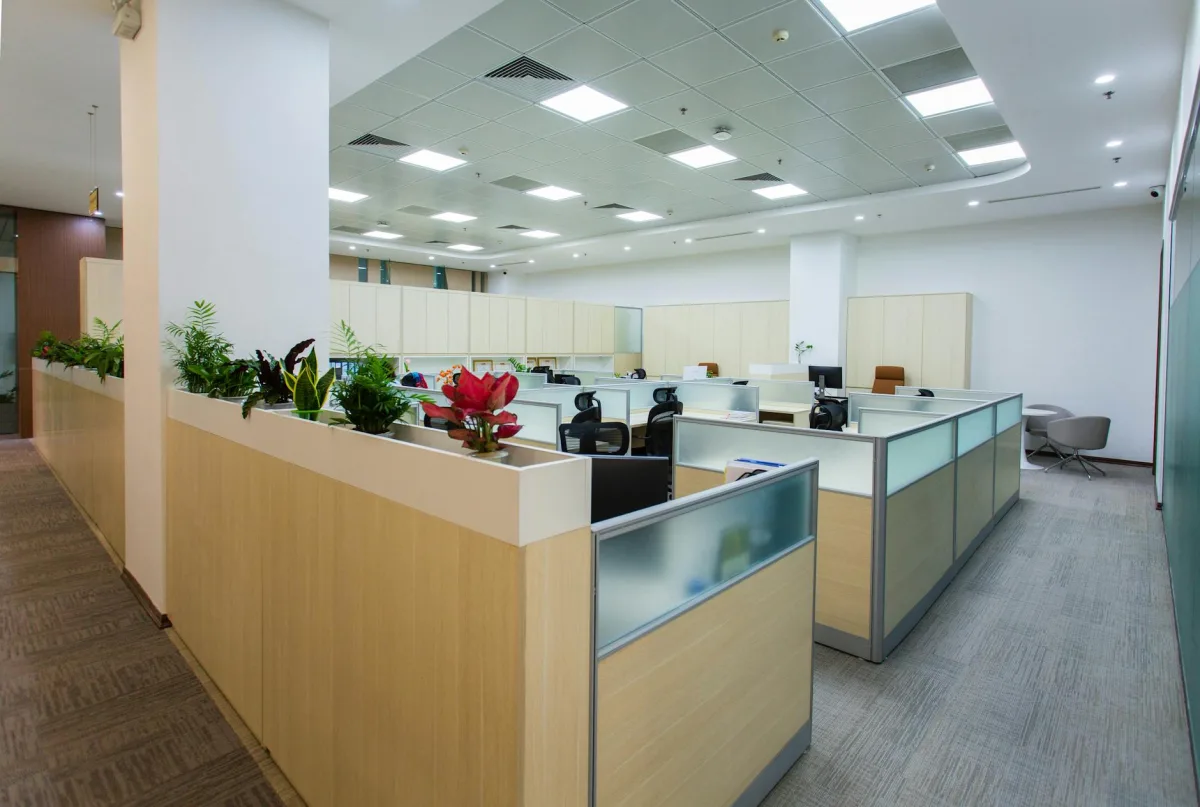
The business case for investing in indoor air quality has matured from "soft" to "load-bearing." Satish et al. (LBNL, 2012) ran controlled exposures in a real office and found decision-making performance fell measurably at 1,000 ppm CO2 and substantially at 2,500 ppm. Allen et al. at the Harvard T.H. Chan School replicated and extended the work, showing decrements across nine cognitive function domains.
Fisk's ventilation reviews connect higher ventilation rates with measurably lower sick-leave (1-5 days fewer per worker per year above ASHRAE 62.1 minimums), and lower self-reported sick-building-syndrome symptoms. Allen's Healthy Buildings work translates these effects into financial returns: in a knowledge-worker context, the productivity gains from doubling ventilation rates above code minimum typically pay for the HVAC energy cost five to ten times over.
For PM2.5, the effects extend beyond cognition. Reduced indoor PM during outdoor pollution events (wildfire smoke, urban high-traffic days) is associated with 5-10% better cognitive performance and reduced respiratory complaints. The intervention (HEPA filtration sized for the space) typically costs less than one productivity-impacted day per worker per year.
The dashboard's commercial deployment surfaces the relevant numbers: time-in-band per parameter per zone, occupancy-correlated CO2 curves, post-event recovery time. The point is not to micromanage employees, but to give facility managers the data to make the building work better. Conference rooms that frequently breach 1,500 ppm get flagged for additional ventilation; quiet zones that stay under 800 ppm tell you the HVAC is working.
References
- Allen et al. - Building science and human health doi.org
- Satish et al., LBNL - Is CO₂ an indoor pollutant? doi.org
- Harvard T.H. Chan - CO₂ and cognitive function healthybuildings.hsph.harvard.edu
- Fisk - Health and productivity benefits of ventilation doi.org