

A growing body of research links air-quality exposures to outcomes outside the respiratory and cardiovascular literature. The Lancet Planetary Health 2020 meta-analysis links chronic ambient PM2.5 exposure to elevated risk of depression and anxiety; multiple cohort studies link traffic-related air pollution to dementia incidence in older adults. The mechanisms are still being mapped (systemic inflammation, oxidative stress, possibly direct olfactory-pathway exposure of the brain to ultrafines).
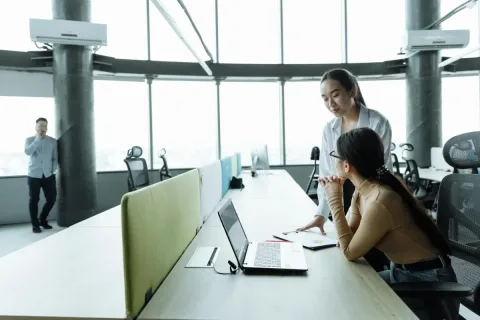
The most-replicated indoor finding is on cognitive performance vs CO2. The Allen 2016 Harvard COGfx study tested office workers in chambers at 550, 945, and 1,400 ppm CO2. Cognitive function scores dropped 15% at 945 ppm and 50% at 1,400 ppm versus baseline, across nine cognitive domains. The Satish 2012 LBNL study found similar effects. These are not lab artifacts; they show up across multiple research groups.
What this means for the dashboard: chronic indoor CO2 above 1,000 ppm is no longer "just stuffy". A home office that sits at 1,200 ppm during a workday is paying a measurable cognitive cost, and the cost compounds across afternoons, weeks, and years. The 1,000 ppm target adopted by ASHRAE 62.1, Health Canada, and the AAQS catalog is a research-grounded threshold, not just a comfort heuristic. For populations already managing depression or anxiety, the case for keeping indoor CO2 low is stronger, not weaker.
A note on caution. The mental-health literature on indoor air is younger than the respiratory literature; associations are robust but mechanisms are not fully nailed down, and causality vs confounding is still debated for some outcomes. The dashboard should not be used to diagnose mood disorders or cognitive decline; that is medical territory. What the dashboard can do is remove one large source of variance (chronic stuffy CO2) from a person's environment, so that whatever else is going on can be characterized more cleanly.
This is environmental information, not medical advice. The dashboard's readings help you make decisions about the air in your space. They do not diagnose conditions, interpret symptoms, or replace conversations with your physician. If symptoms persist, worsen, or coincide with a known exposure, talk to a healthcare professional. See the AI's medical-advice scope.