
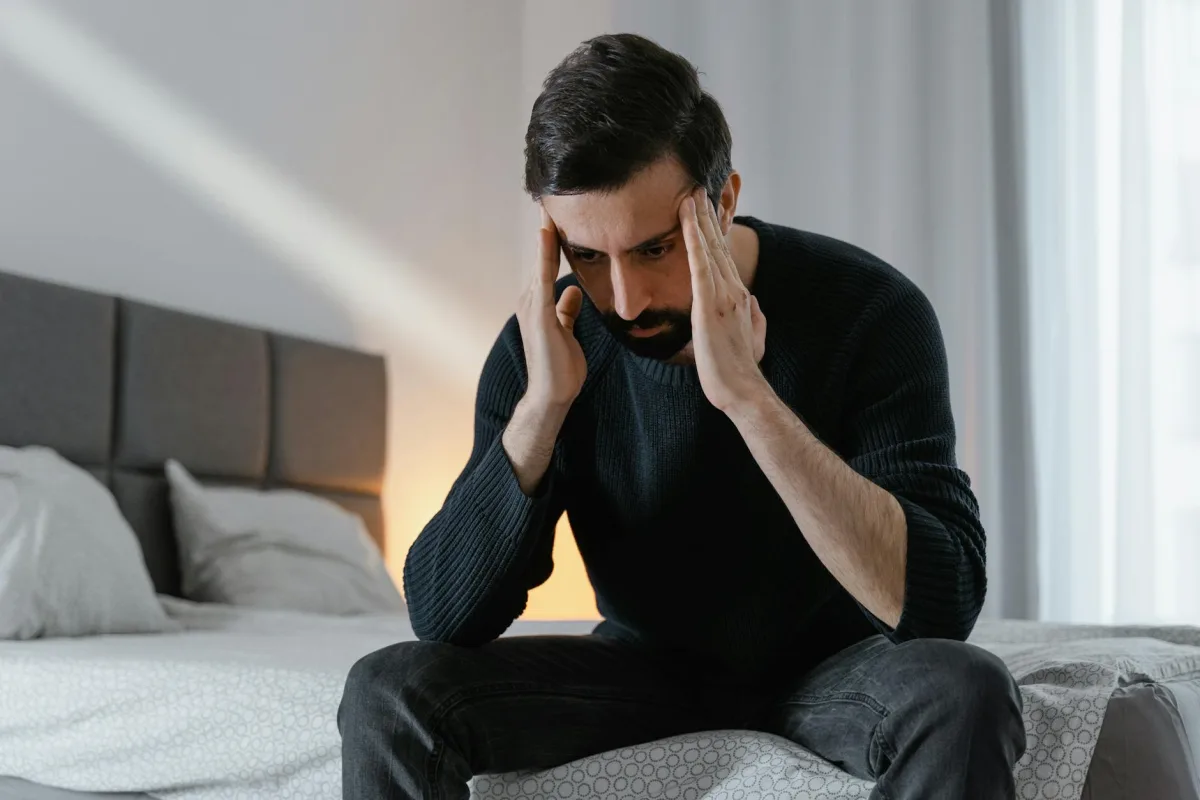
Migraine affects about 1 in 7 people globally and disproportionately women of reproductive age. The pathophysiology involves trigeminal sensitization and cortical spreading depression; from a practical user standpoint, what matters is that environmental triggers are individual, often subtle, and frequently dismissed by people who think they are imagining things. The dashboard's value is corroborating evidence: if a migraine onset correlates with a documented VOC spike or a sudden pressure drop, you can build a personal trigger profile from the historical data.
Most-reported triggers per the American Migraine Foundation include weather changes (especially barometric-pressure drops preceding a storm), strong odors (perfumes, paints, cleaning products), and "poor air quality". The first two map onto dashboard signals directly: pressure trend on the weather strip, and VOC index spikes for the latter. The third is less specific but tends to correlate with elevated outdoor PM, ozone, or NO2 on bad-air days.
The trigger-correlation pattern most users find when they look back through the data: cleaning products on Sunday morning, migraine onset Sunday afternoon. Painting a room, migraine onset that evening. Pressure dropping 5+ hPa over six hours ahead of a thunderstorm, migraine the next morning. Wildfire smoke day with PM2.5 above 50 μg/m³, migraine within 24 hours. None of this is diagnostic; the dashboard cannot tell anyone whether they have migraine or what to do about it medically. But the data lets a person have a more concrete conversation with their neurologist than "I think the weather makes my headaches worse".
Practical use: tag migraine-onset times in a tracker app (or just a notes app) for a few months. Cross-reference against the dashboard history for the same hours. If a pattern emerges, the corresponding mitigation is usually obvious: low-VOC cleaning products, better ventilation during/after cleaning, awareness on pressure-drop days, indoor air-purification during smoke events. See reducing VOCs indoors and low-VOC finishes.
This is environmental information, not medical advice. The dashboard's readings help you make decisions about the air in your space. They do not diagnose conditions, interpret symptoms, or replace conversations with your physician. If symptoms persist, worsen, or coincide with a known exposure, talk to a healthcare professional. See the AI's medical-advice scope.
References
- American Migraine Foundation - Top migraine triggers americanmigrainefoundation.org
- American Headache Society - Pressure and headache americanheadachesociety.org
- WHO - Ambient (outdoor) air quality and health www.who.int
- The Journal of Headache and Pain thejournalofheadacheandpain.biomedcentral.com